5 de agosto de 2026 • Centoffer Editorial • 15 min de lectura
Health & Safety for Field IT Support Across Indonesia's Islands
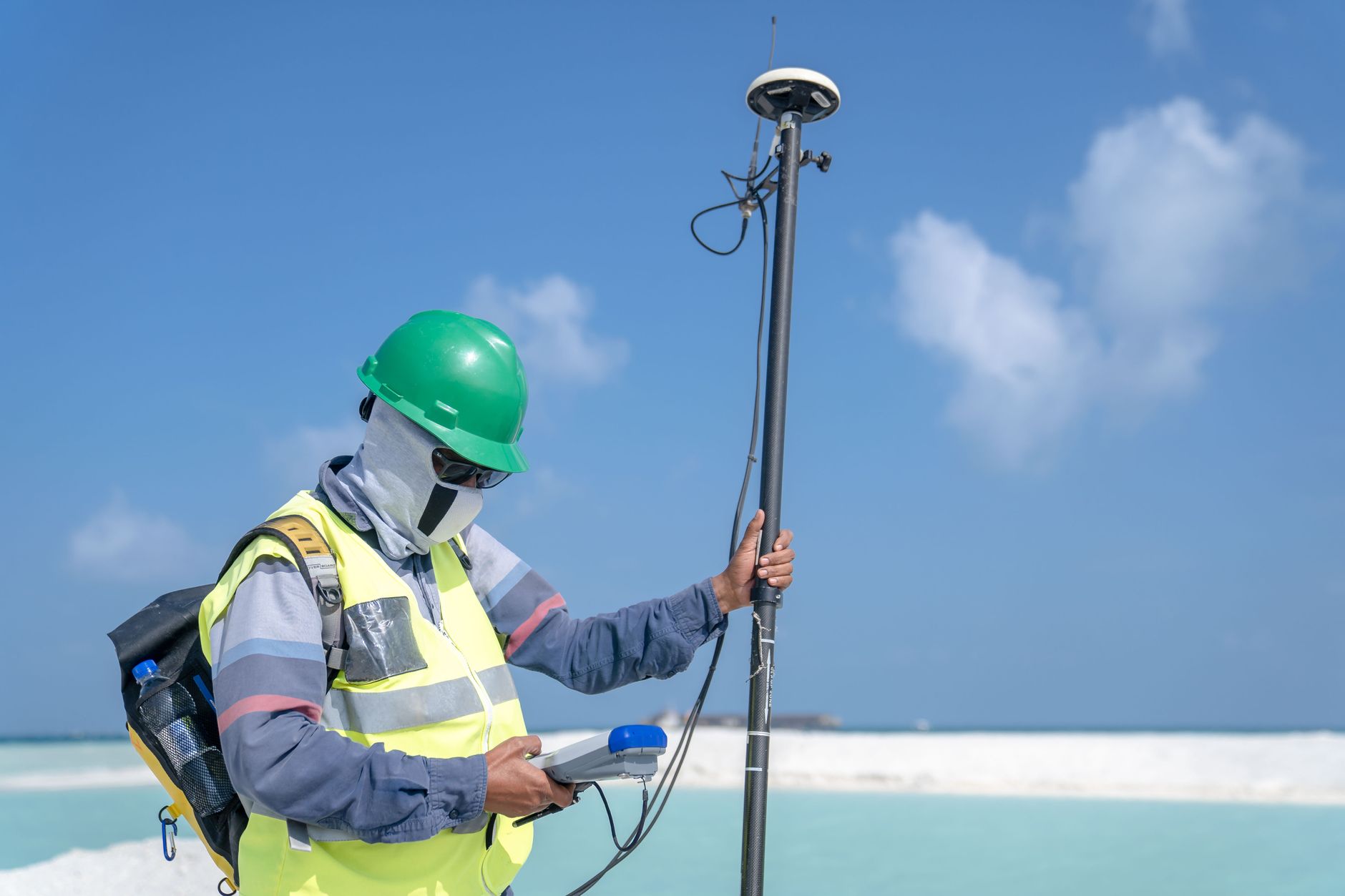
Health & Safety for Field IT Support Across Indonesia’s Islands
An enterprise IT buyer scoping field support across Jakarta, Surabaya, and a handful of branch offices in Kalimantan or Sulawesi typically evaluates providers on coverage maps and response-time SLAs. Safety gets reduced to a single line in the vendor questionnaire — “do you carry insurance?” — and rarely comes up again until something goes wrong. In Indonesia, that gap is riskier than in almost any other Southeast Asian market, because the same geography that makes coverage hard to deliver also makes safety failures more likely, and the two problems compound each other on exactly the same tickets.
Indonesia is the world’s largest archipelago, spanning more than 17,000 islands from Sumatra to Papua, with field IT demand concentrated in Jakarta and a small number of secondary cities, then thinning rapidly into a long tail of provincial and outer-island sites with wildly inconsistent infrastructure. This article explains why field-safety discipline and SLA performance are the same problem in Indonesia, what a real safety programme looks like, and how buyers should evaluate whether a provider’s K3 (occupational safety) practice is genuine or just a policy document nobody follows.
What Is K3 and Why Does It Matter for Field IT Support in Indonesia?
K3 — short for Keselamatan dan Kesehatan Kerja, or occupational health and safety — is Indonesia’s statutory workplace-safety framework, established under Law No. 1 of 1970 concerning Occupational Safety (Undang-Undang Keselamatan Kerja) and enforced by the Ministry of Manpower (Kementerian Ketenagakerjaan). It applies to any workplace where employees face occupational hazards, and field IT work — rack installation, cabling through ceiling voids, work near live electrical panels — squarely qualifies. A field IT provider operating in Indonesia should be able to describe its K3 programme by name and produce supporting documentation, not offer a generic “we follow local law” assurance.
K3 compliance sits alongside — and works with — Indonesia’s mandatory social insurance system. BPJS Ketenagakerjaan, the Employment Social Security Administering Body, provides Jaminan Kecelakaan Kerja (JKK, work accident insurance) that Indonesian employers are required to carry for their workforce. For an enterprise buyer, this means a credible IT field service provider should be able to show BPJS Ketenagakerjaan enrollment for its engineers, and — just as importantly — confirm that the coverage actually matches the work being performed, rather than a generic policy that quietly excludes electrical or structural tasks.
Why Safety Failures Are SLA Failures in Indonesia
A safety incident and a missed SLA are, mechanically, the same event viewed from two different reporting systems. When a field engineer is injured, delayed by an undisclosed site hazard, or pulled off a job because a storm warning grounds inter-island travel, the ticket doesn’t close — the SLA clock keeps running regardless of cause. Three specific mechanisms link the two in Indonesia:
- Work stoppage and mandatory review. An injury or serious near-miss typically triggers an immediate halt, an incident report, and often a cooling-off period before the same engineer — or any engineer from that provider — returns to a similar site type. The original outage that justified the dispatch is now unresolved for longer than the incident itself took.
- Engineer hesitation at unassessed sites. Without a clear risk-assessment process, engineers reasonably hesitate at sites with visible hazards — exposed wiring, an unlabeled electrical panel, an unstable server-room floor. That hesitation looks like slow performance to the buyer, when the underlying cause is that the site was never properly assessed in the first place.
- Legal exposure that follows the workplace, not just the employer. Under Law No. 1 of 1970, obligations for a safe workplace attach to the party in control of it — a principle that, in a client-site field-service context, does not simply disappear because the work was contracted out. A buyer who allows unassessed access to its sites does not automatically insulate itself from that exposure.
A provider that invests in genuine K3 discipline is, structurally, the same provider that shows up reliably, escalates honestly, and delivers a consistent first-time-fix rate. Safety culture is a leading indicator of overall operational maturity, not a side issue to service quality.
How Does Indonesia’s Geography Change Field Safety Risk?
Indonesia’s geography changes field safety risk primarily through two forces: extreme population and infrastructure concentration on Java, and archipelago logistics for everywhere else. According to Indonesia’s national statistics agency, Badan Pusat Statistik (BPS), the 2020 Population Census recorded more than half of Indonesia’s population living on Java (bps.go.id) — an island that makes up roughly 7% of the country’s total land area. That concentration means Jakarta, Surabaya, and Bandung enjoy relatively modern infrastructure and dense provider networks, while a large share of enterprise sites in Sumatra, Kalimantan, Sulawesi, and Eastern Indonesia depend on dispatch chains that stretch across flights, ferries, and long overland travel.
Layered on top of that geography, Indonesia sits along the Pacific Ring of Fire, with active seismic and volcanic risk tracked by the National Disaster Management Agency, Badan Nasional Penanggulangan Bencana (BNPB), and a pronounced wet season — typically November through March — that brings flooding risk to low-lying urban areas and disrupts inter-island travel schedules. A field-safety programme designed only around Jakarta’s CBD towers will systematically under-protect engineers dispatched anywhere outside it.
The Indonesia-Specific Risk Profile
A handful of factors combine to make field IT safety in Indonesia distinct from a single-landmass market:
- Java-outer-island infrastructure gap. Modern office towers and data centers in Jakarta, Surabaya, and Bandung typically meet strong electrical and structural standards. Provincial offices, plantation sites, and older commercial buildings elsewhere often do not — exposed panels, undocumented wiring, and non-compliant grounding are common enough that a provider without a real site-assessment discipline will eventually put an engineer at genuine risk.
- Archipelago logistics. Dispatching an engineer to a site in East Kalimantan, Sulawesi, or Eastern Indonesia can mean a domestic flight, a ferry crossing, and hours of overland travel before the engineer even reaches the building — each leg adding fatigue and transport risk before any technical work begins.
- Seismic and volcanic activity. Indonesia experiences frequent earthquakes and periodic volcanic activity; a provider needs an explicit protocol for what happens to a scheduled dispatch when a seismic or volcanic alert is issued for the destination region, rather than leaving the call to an individual engineer under pressure to hit a response-time SLA.
- Monsoon flooding. Jakarta and other low-lying cities experience seasonal flooding that can strand engineers, damage equipment in transit, and close roads with little notice during the wet season.
- Lone-worker conditions. A single engineer dispatched to a branch office, retail site, or small server closet — common across Indonesia’s dispersed commercial footprint — works without a second person present, which matters if an incident occurs and no one is nearby to notice.
- Language and coordination gaps across a large contractor base. A national field service footprint in Indonesia often relies on engineers and subcontractors spread across dozens of cities and regencies, coordinated through regional hubs rather than a single office. Safety standards that are only communicated clearly at head office — rather than translated and reinforced consistently down to each regional hub — tend to erode exactly where oversight is thinnest.
None of these risks are exotic — they are the ordinary operating conditions of field IT support across Indonesia, and a provider that has built explicit protocols around each one performs measurably more reliably than one that hasn’t.
A Closer Look: What an Outer-Island Dispatch Actually Involves
The abstractions above understate how many separate decision points stack up in a single routine job. Consider a manufacturing client with a network outage at a plant in Balikpapan, East Kalimantan, reported to a Jakarta-based IT helpdesk. An unmanaged dispatch sequence typically looks like this:
- Ticket triage in Jakarta, often hours after the plant’s local team first noticed the issue, because escalation routes through a head-office helpdesk with no local point of contact.
- Flight booking to Balikpapan, subject to weather delays that are more common during the wet season, with no fallback plan built in if the flight is cancelled or delayed.
- Ground travel from the airport, sometimes over roads with limited lighting or signage, arriving at a plant that may not have briefed the engineer on its specific electrical layout or emergency procedures.
- On-site work performed alone, in a facility that may combine industrial and IT infrastructure, with no second engineer present and no structured check-in cadence.
- Return travel same day or the next, often under time pressure to catch a limited daily flight schedule — precisely the condition under which fatigue-related incidents are most likely.
A mature provider pre-books flexible travel with weather contingency, maintains a standing site profile for that specific Balikpapan plant (electrical layout, hazards, nearest medical facility), requires check-ins at each stage, and builds the realistic round-trip time into the SLA clock rather than starting the clock at ticket creation and penalizing the engineer for delays outside their control. A provider without that discipline treats each step as the individual engineer’s problem to improvise in the moment — which is exactly how avoidable incidents happen, and exactly why “the engineer was late” so often has a root cause the buyer never sees.
What Should a Real Safety Programme in Indonesia Include?
A credible field IT provider’s K3 programme should give buyers concrete evidence across five areas, not a general assurance:
1. Site risk assessment before first dispatch
A real risk assessment happens before the first engineer visit to a new site, not after an incident — covering electrical isolation points, structural hazards, emergency egress, and any site-specific access requirements. That assessment should be stored and referenced on every subsequent visit, not repeated from memory.
2. Lone-worker check-in protocols
For single-engineer dispatches, ask whether the provider maintains a defined check-in cadence — arrival, mid-job, completion — monitored by a dispatcher, with a clear escalation path if a check-in is missed. A dispatch platform with GPS-verified check-ins is meaningfully safer than reliance on an engineer’s personal phone call to a supervisor who may be unreachable.
3. Seismic, volcanic, and weather protocols
Ask directly: what happens when BNPB or local authorities issue a seismic or weather alert covering a dispatch destination? A credible provider has a tiered response — deferring non-critical visits, requiring supervisor sign-off for essential dispatches during active alerts, and building travel-time buffers into SLA clocks for inter-island or provincial jobs.
4. PPE and electrical safety discipline
For any work involving server rooms, UPS systems, or electrical panels, engineers should carry and use appropriate PPE and follow a lockout-tagout discipline before working on live or potentially live equipment, regardless of how routine the task appears.
5. Insurance that matches the actual work performed
Confirm BPJS Ketenagakerjaan enrollment covers the specific activities engineers perform — structural work, electrical work, and inter-island travel — not just “IT support services” in the abstract. A policy that excludes the real work being done provides no real protection.
How Much Does a Safety Incident Actually Cost an Enterprise Buyer’s SLA?
A safety incident costs an enterprise buyer far more than the direct medical or repair expense — it costs SLA attainment, dispatch capacity, and, in the worst cases, legal exposure that outlasts the incident itself. The mechanics compound in a predictable sequence:
| Cost driver | What actually happens | Downstream SLA impact |
|---|---|---|
| Immediate work stoppage | The job halts, an incident report is filed | The original ticket remains open, sometimes for days |
| Engineer cooling-off period | The same engineer, or the provider’s staff generally, pauses similar dispatches pending review | Reduced dispatch capacity for a period, delaying unrelated tickets |
| Replacement dispatch | A second engineer must be briefed and sent, often from further away | Duplicate travel cost and a second SLA clock effectively restarting |
| Regulatory and reporting exposure | Ministry of Manpower or BPJS Ketenagakerjaan reporting obligations trigger | Administrative burden and potential liability under Law No. 1 of 1970 |
| Reputational cost with the site’s business unit | The local team loses confidence in the vendor relationship | Increased scrutiny, slower sign-off on future dispatches, contract review risk |
None of these costs show up as a line item in a vendor invoice, which is exactly why safety tends to be underweighted in vendor scorecards relative to its real operational impact. A provider with a strong K3 discipline avoids not just the incident itself, but this entire downstream cascade.
The pattern also compounds across a contract’s life in a way a single-incident view misses. A provider with recurring near-misses at a particular site type — say, repeated close calls with unlabeled electrical panels in older provincial buildings — is showing an early-warning signal that eventually produces a real incident, and with it, the full cost cascade above. Buyers who only look at response and resolution attainment in their quarterly business reviews are missing the leading indicator that predicts where the next missed SLA is most likely to originate. Folding near-miss and incident data into the same scorecard as SLA metrics turns a lagging signal (an actual outage caused by a safety event) into a leading one (a site or site type that needs intervention before it causes one).
Sample SLA Clause: Building Safety Into the Contract
Most field IT contracts bury safety in a general representation (“Vendor shall comply with applicable law”) rather than an operational commitment tied to the same reporting cadence as response and resolution times. A working clause structure looks like this:
Field Safety and K3 Compliance. Provider shall (a) complete and document a site risk assessment prior to the first engineer dispatch to any new site, covering electrical isolation points, structural hazards, and emergency egress; (b) maintain BPJS Ketenagakerjaan enrollment, or equivalent work-accident insurance, for all personnel performing work under this Agreement, matched to the actual scope of work performed; (c) maintain a lone-worker check-in protocol for all single-engineer dispatches, with a defined escalation procedure triggered by a missed check-in; (d) suspend non-critical dispatches to affected regions during an active BNPB seismic, volcanic, or severe weather alert, absent written client authorization for essential work; and (e) report all safety incidents and near-misses affecting Client sites within 24 hours, alongside standard monthly SLA reporting.
This is not a legal template to copy verbatim — a buyer’s counsel should adapt it — but it illustrates the shift from “the vendor promises to be safe” to “the vendor reports safety performance on the same cadence as everything else.”
Regional Risk Comparison Across Indonesia
Not every site carries the same risk profile, and a provider’s protocols should flex by geography rather than apply one blanket policy nationwide.
| Region type | Primary risk factors | What good looks like |
|---|---|---|
| Jakarta, Surabaya, Bandung (Java metros) | Traffic delays, monsoon flooding, high building density | Realistic travel-time buffers; flood-season contingency planning even in modern CBD sites |
| Java non-metro & older commercial buildings | Inconsistent electrical standards, less predictable site conditions | Mandatory site risk assessment before first visit; PPE and lockout-tagout enforced regardless of how routine the job looks |
| Sumatra, Kalimantan, Sulawesi | Flight/ferry dependency, plantation and industrial site access, longer emergency-response times | Standing site profiles per location, realistic SLA clocks that account for inter-island travel |
| Eastern Indonesia & Papua | Limited transport frequency, higher seismic activity, most severe lone-worker isolation | Explicit weather/seismic contingency protocol, mandatory check-in cadence, pre-identified local emergency contacts |
The point of this comparison isn’t that outer-island dispatch is inherently unsafe — it’s that a policy written for a Jakarta office tower will systematically under-protect engineers sent to Kalimantan or Eastern Indonesia, and a provider that hasn’t adapted its protocols by region likely hasn’t thought this through in practice.
A Buyer’s Field-Safety Compliance Checklist
Before signing or renewing a field IT support contract in Indonesia, request documented answers to the following:
- Site risk assessment — a written assessment per site type, refreshed periodically, not improvised on arrival.
- Lone-worker protocol — a defined check-in cadence and escalation procedure, not informal phone calls.
- BPJS Ketenagakerjaan coverage — enrollment matched to the actual scope of work, not a generic policy.
- Seismic and weather response — documented alert tiers and travel-time SLA buffers, not an assumption that the SLA clock never pauses.
- PPE and electrical safety — a defined PPE list and lockout-tagout procedure for any electrical work.
- Incident and near-miss reporting — a process visible to the buyer, not something that only surfaces after something serious happens.
- Subcontractor flow-down — confirmation that K3 standards apply to subcontracted engineers, not only directly employed staff.
A provider that answers all seven with specifics — not reassurance — is one whose safety discipline will show up as consistency in SLA metrics, not just as an absence of accidents.
Why This Belongs in the SLA Conversation, Not a Separate Audit
Treating safety as a one-time vendor-onboarding audit, separate from the ongoing SLA relationship, misses how these risks actually evolve. Sites change — a new branch opens, a building is renovated, a region is affected by flooding or seismic activity. The better model folds safety reporting into the same operational cadence as SLA reporting: incident and near-miss counts, site-risk-assessment coverage, and check-in compliance rates belong on the same dashboard as response times and resolution rates, reviewed at the same quarterly business review.
This is the model behind Centoffer’s global IT field services network — dispatch, proof-of-delivery, and safety-relevant site data captured in one workflow rather than two disconnected reports. Every engineer on the Centoffer marketplace goes through a structured vetting process before becoming eligible for dispatch, and site-specific risk notes carry forward automatically to future visits instead of relying on individual memory — the same discipline that underpins reliable field IT support across health-and-safety-sensitive markets generally.
Bringing This Into Your Next Vendor Conversation
If you manage field IT operations across Indonesia — or are evaluating a new provider for Jakarta, Surabaya, or outer-island coverage — don’t let safety stay a one-line insurance question in the RFP. Ask for the K3 programme, the site-risk-assessment process, the lone-worker check-in mechanism, and the seismic/weather response protocol in writing, and treat the answers with the same weight as the response-time SLA — because in practice, they’re the same commitment viewed from two different angles.
Centoffer connects enterprise IT buyers in Indonesia with vetted, trained field engineers and a dispatch platform that tracks service delivery and site safety data together. Explore Centoffer’s IT services in Indonesia or get in touch to discuss field support coverage for your sites.